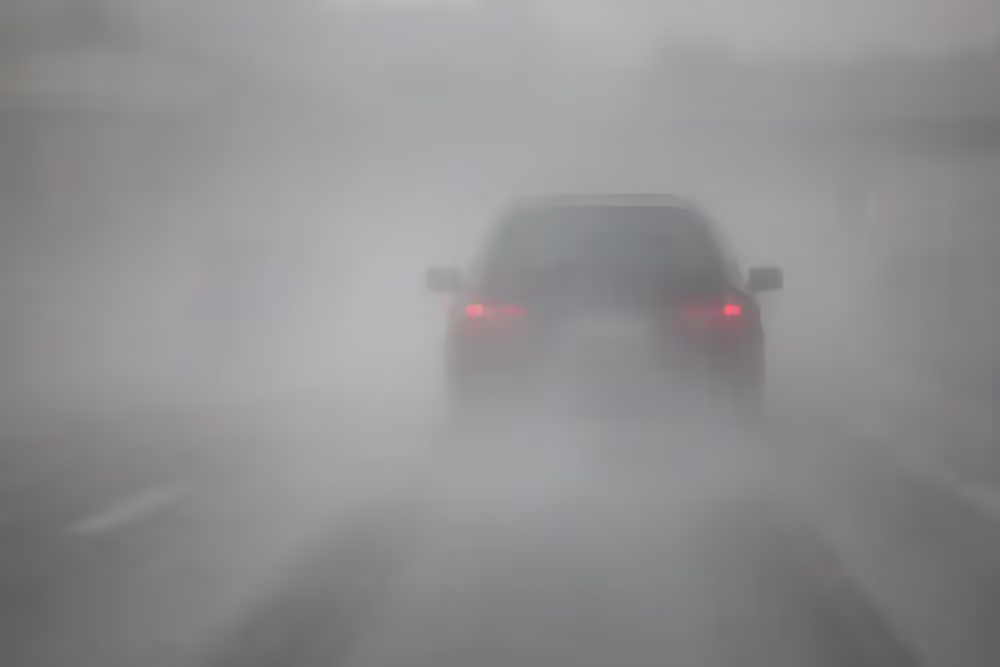
What must you take into account in heavy rain like in the picture?
Explanation
In heavy rain, both visibility and road grip deteriorate. Spray from other vehicles, a film of water on the windshield, and reflections from the wet road reduce visibility, while water on the roadway increases the risk of aquaplaning and lengthens braking distance. Therefore, you must reduce your speed, increase the distance to the vehicle in front, drive smoothly without sudden maneuvers, use low beams, and preferably place your wheels in the tracks of other vehicles to get the best possible drainage. The speed limit is an upper limit—in such weather it may be appropriate to drive significantly slower. Incorrect answer choices: Driving fast to arrive quickly increases risk. Low speed does not eliminate the impact on visibility and grip; it only reduces the risk. Rain does not improve road grip; water can form a film that makes the surface more slippery.
Which of these signs indicates a yield (give way) requirement?
Explanation
Right-of-way is regulated by yield signs and priority road signs, because they determine who has priority and who must yield. Here, A, B, D, and E are such signs (typically Yield, Stop, Priority Road, and End of Priority Road). Sign C is an information sign that only provides information, and F is a mandatory sign indicating required driving/direction. Therefore, only A, B, D, and E regulate right-of-way. Options that include C and F—or “all”—are incorrect.
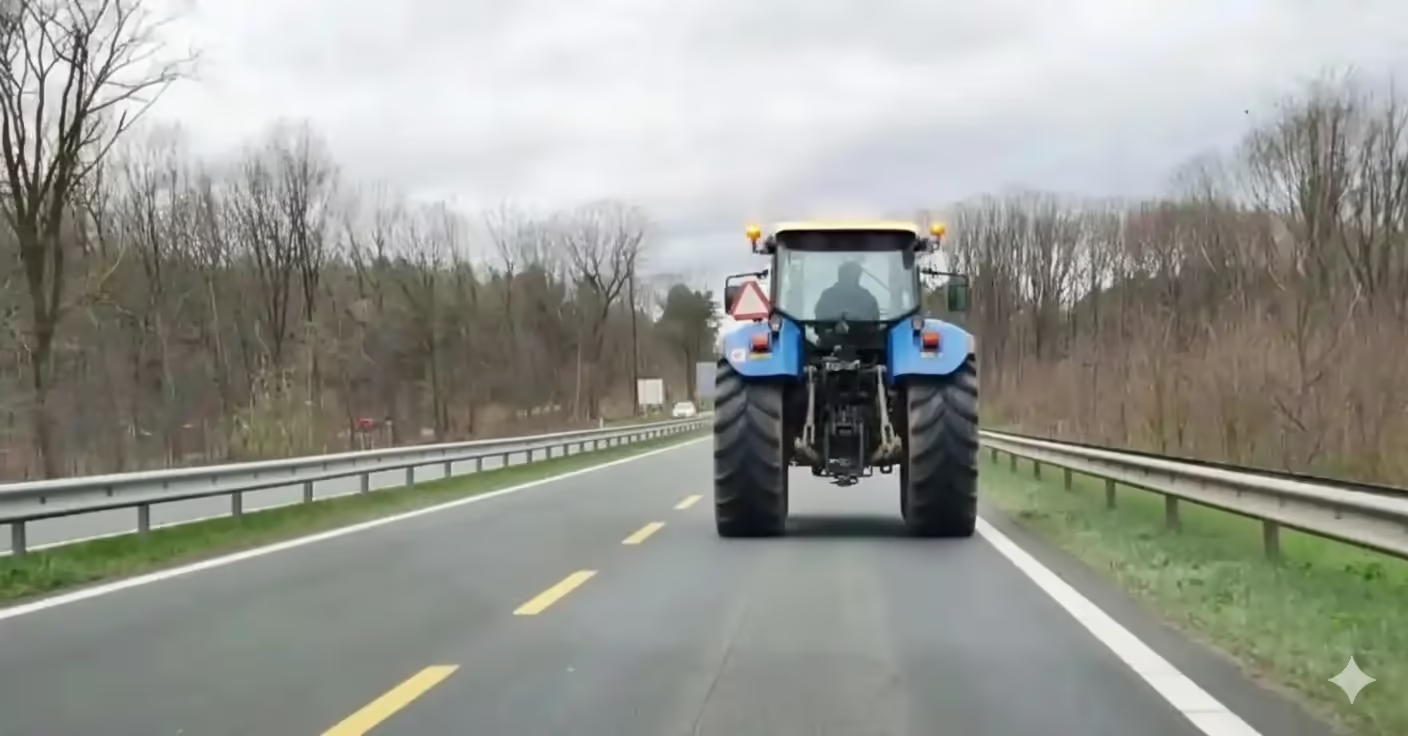
You’re driving behind a slow tractor that’s indicating right. What do you do?
Explanation
Even though some tractors and truck combinations signal right to indicate it may be clear to pass, it is never a binding message. When overtaking, you as the overtaking driver always bear full responsibility for ensuring it can be done safely. If you lack sufficient visibility, you must stay behind. Here, the visibility is too poor, so overtaking is out of the question. In addition, a tractor may signal right because it actually intends to turn into a driveway, and large vehicles may move out to the left before making a right turn. Attempting to overtake in such cases can lead to a collision. Therefore, the correct action is to remain behind until you yourself have a clear view and can judge that it is safe.
Option 2 is incorrect because you cannot rely on the signal from the vehicle ahead. Option 3 has the wrong reasoning; the problem here is visibility, not a general prohibition. Option 4 may be sensible as a speed adjustment, but it does not change the main decision: you should not overtake.
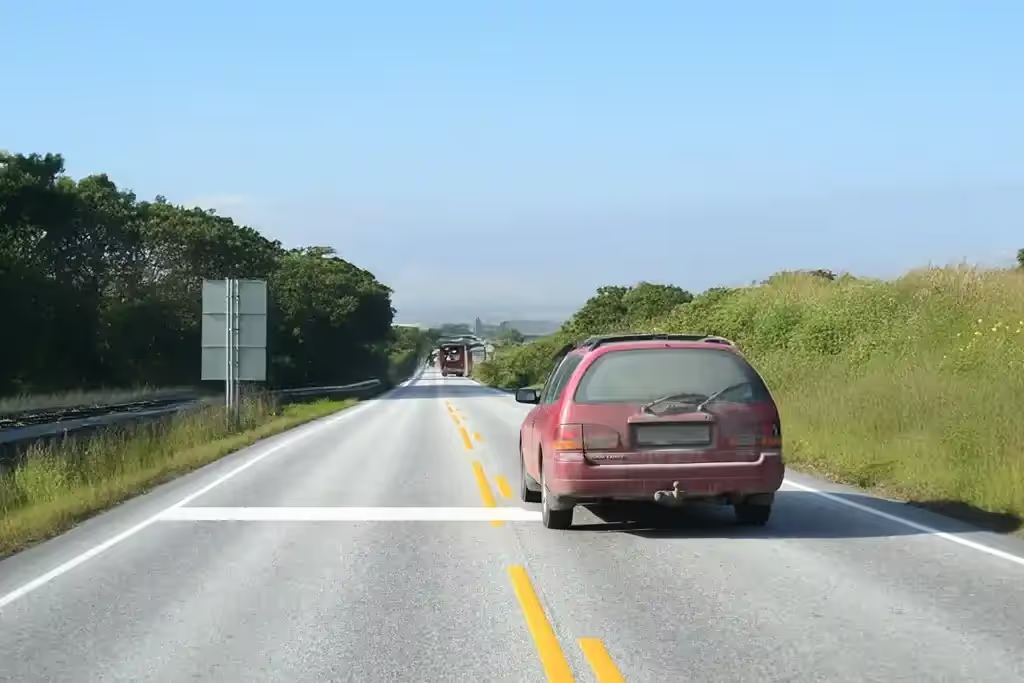
Which part of overtaking is the most risky?
Explanation
The phase after the white line (the point in the figure where the overtaking can no longer be safely aborted) is the most risky. At that point you are in the oncoming lane, often side by side with the vehicle you are passing, and have few or no safe escape options. You are obligated to complete the overtaking, while uncertainty about oncoming traffic, speed, and distance can increase the risk. Before the white line you can always abort, ease off the accelerator, and tuck back in if the situation changes. It is precisely the ability to abort safely that makes the first phase less dangerous. Therefore, plan the overtaking so that you have ample margin to pass and merge back before oncoming traffic, and make sure the decision to proceed is made before you cross the white line.
What do our users say?
We recommend all students to use eteo, a superb tool to pass the theory!
Practiced every day for about a week and passed the theory today with only two errors. The questions were very similar to what I got. Recommended to everyone taking the theory!
eteo is the only site that offers free theory tests that are enough to pass, so we recommend the site to everyone taking a driver's license. Most others only offer 10 questions or similar.
Eteo.no really helped me prepare for the Norwegian driving theory test. The questions felt like the real exam, the explanations were clear, and I passed on my first try.
Great tool for anyone serious about passing the driving theory exam. I liked tracking my progress and taking realistic mock exams. It works smoothly on mobile and desktop and made studying more effective.
Eteo.no was extremely helpful in preparing me for the theory test. The mock exams helped me get used to the question format and time pressure. I felt calm and well prepared on exam day thanks to all the practice.
Everything you need to know about the taxi theory test
About the taxi theory test
The taxi theory test (taxi license) is specialized for professional drivers in the taxi industry. The test covers customer service, local knowledge, and special rules for the taxi industry.
Curriculum and topics
The test covers customer service, local knowledge, pricing and fare calculation, legislation for the taxi industry, conflict management, passenger safety, accessibility, and working conditions in the taxi industry.
Pass easily with Eteo
Eteo gives you specialized taxi tests covering all aspects of the profession. Practice thoroughly with realistic questions and become a professional taxi driver!