What is the permitted total weight of the vehicle combination according to the registration certificate?
Explanation
Permitted combined vehicle weight is the highest legal total weight for the vehicle and trailer, including cargo and passengers. In this vehicle registration, the permitted combined vehicle weight is 5,350 kg. The registration also states the permitted trailer weight: with brakes 1,950 kg and without brakes 750 kg, as well as the vehicle’s permitted gross weight of 4,600 kg. You still cannot exceed a total of 5,350 kg, even if the trailer itself could be heavier. Example: If the bus is loaded to 4,600 kg, only 750 kg remains for the trailer (5,350 − 4,600), otherwise you exceed the combined vehicle weight. In general, both the trailer weight limit (with/without brakes) and the combined vehicle weight must be satisfied at the same time.
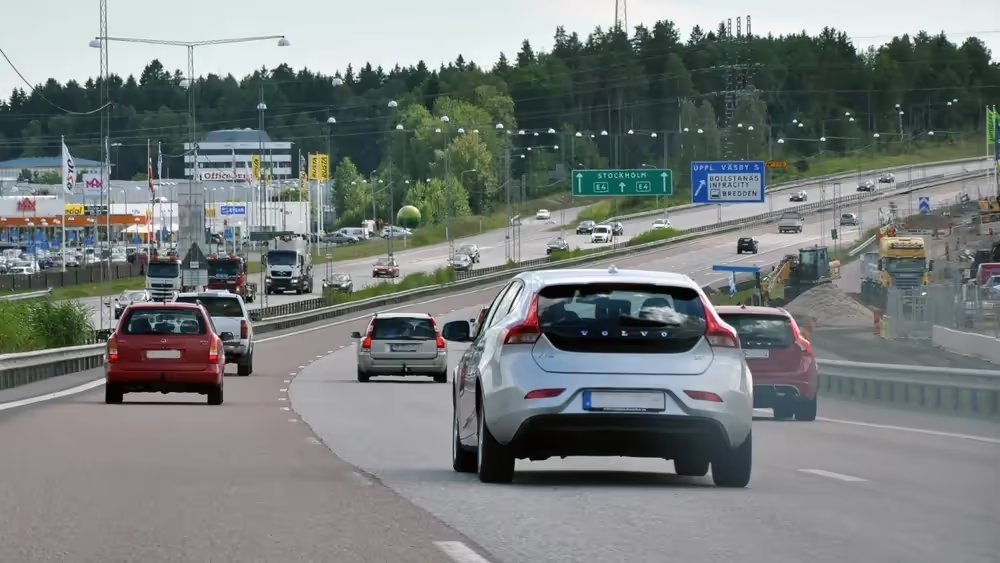
There is little traffic. You see this sign. What should you do?
Explanation
The sign informs you that the road will soon gain an extra lane on the right (meaning there will be three lanes ahead). According to traffic rules, the right-hand lane should be used when it is available, unless signs or regulations state otherwise. When traffic is light, you should therefore plan to move into the right lane when it is safe: check mirrors and blind spot, signal, and change lanes smoothly. The alternative claim that the sign does not require anything overlooks the main rule that you must keep to the right. Moving into the left or middle lane without reason violates this rule and can create unnecessary obstructions. In heavy traffic, multiple lanes can be used to improve traffic flow, but in this situation (light traffic) the right lane is the correct choice.
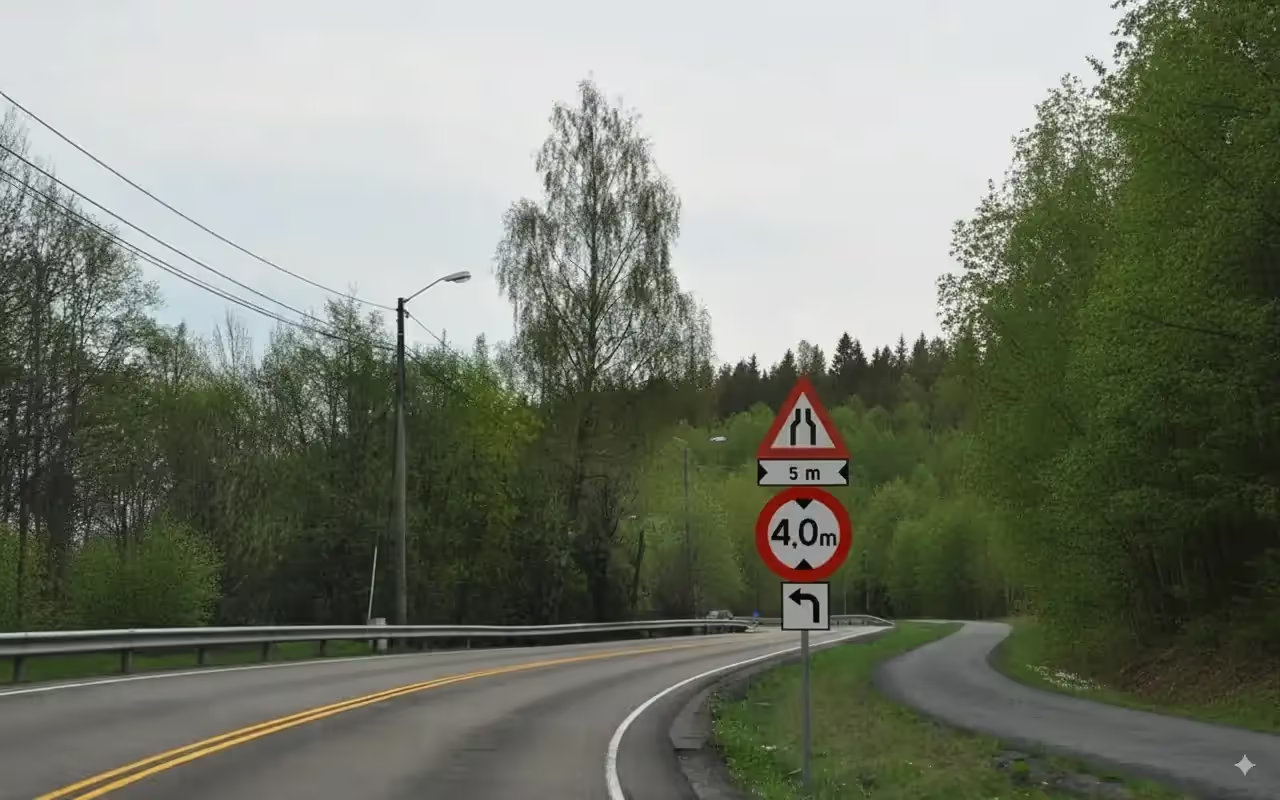
The bus driver is going to turn left. What is important to note?"
Explanation
The signs at the intersection indicate two things. The prohibition sign for a height limit of 4.0 m is combined with a direction arrow pointing left. This means the restriction applies to the road you turn onto to the left, not the road you are currently on. Therefore, the correct assessment is that the road to the left has a height limit of 4.0 m, and buses taller than this (including load, roof equipment, etc.) cannot turn there. The claim that it is “forbidden to pass the sign” in general is incorrect, because the prohibition is tied to the indicated direction, not the current road. Likewise, it is wrong to say that the road you are on has a height restriction. In addition, a warning sign indicates that the road narrows from both sides. Without special regulation, traffic in both directions must yield to each other at the narrowing; typically, the driver farthest from the narrowing waits. Therefore, the option stating that the narrowing is only on the right side is incorrect.
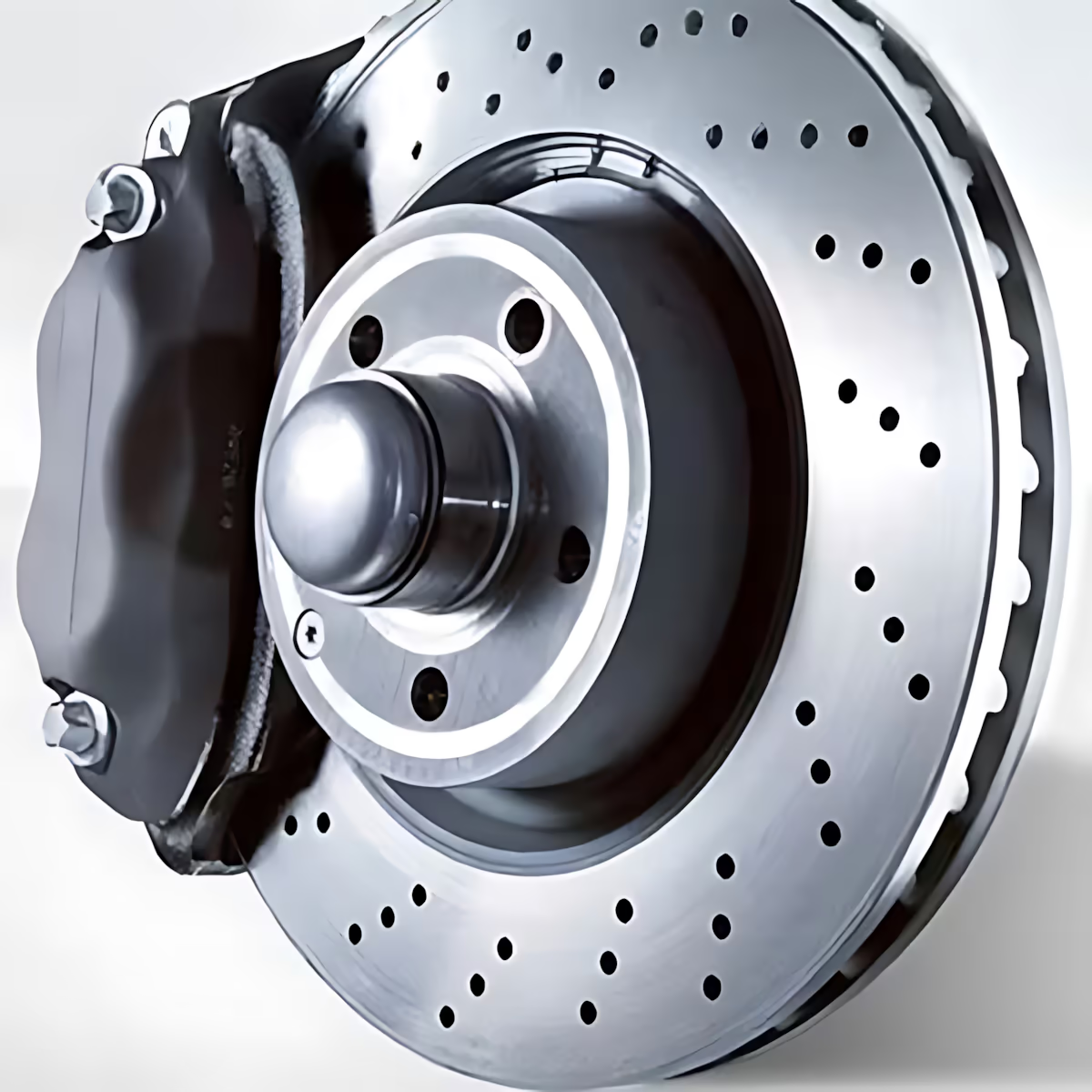
If instead you brake hard from 40 km/h to a complete stop, how does the heat buildup in the brakes change compared to braking from 80 km/h?
Explanation
When you brake to a stop, the brakes must absorb the car’s kinetic energy and convert it into heat in the brake pads and discs. Kinetic energy increases with the square of speed. If you halve the speed from 80 to 40 km/h, the energy (and thus the heat generated) becomes one quarter, because (40/80)^2 = (1/2)^2 = 1/4. Therefore, the correct answer is that the heat generated at 40 km/h is one quarter of that at 80 km/h, given the same car and that braking is to a full stop.
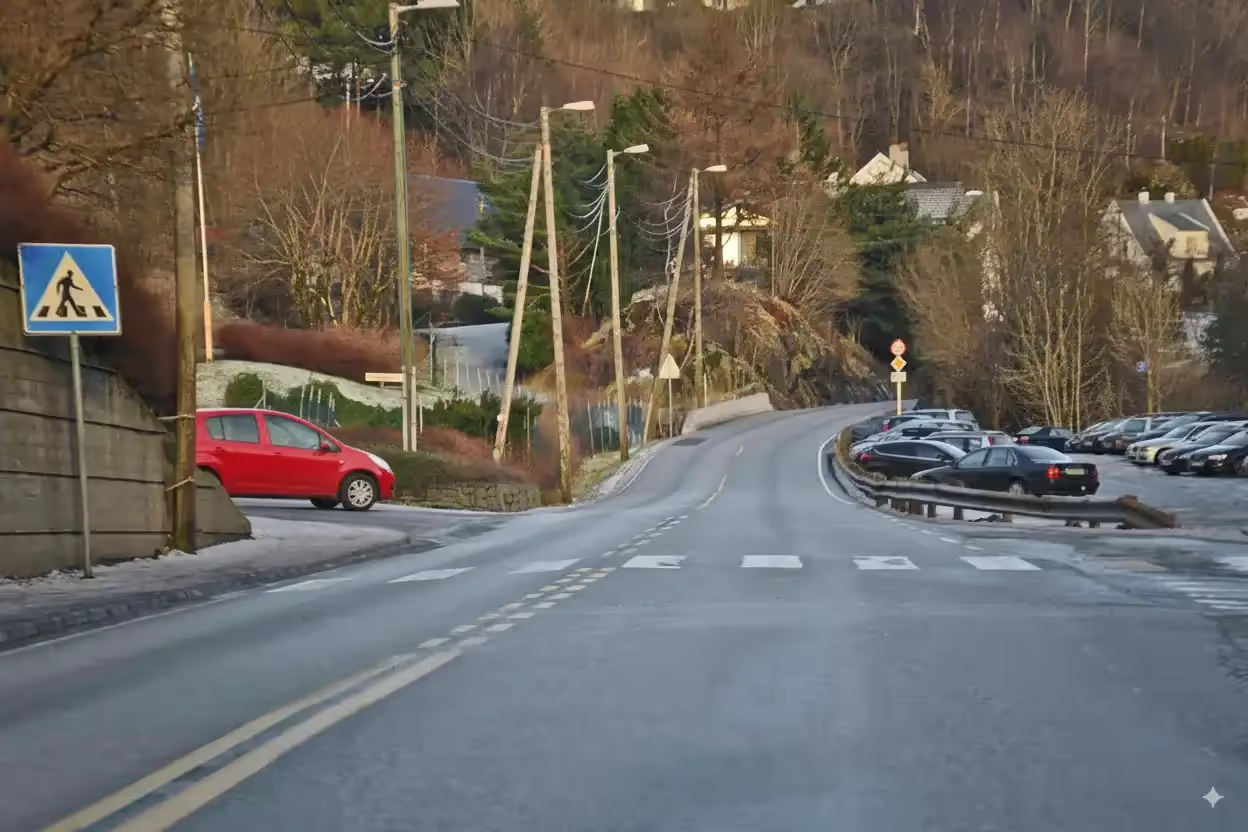
You are going straight through the intersection. What do you need to consider?
Explanation
When you approach an intersection to go straight ahead, you should reduce your speed and be ready to brake. Even if the car from the left has a duty to yield (under the right-hand rule or because you are on a priority road), you must actively make sure that it actually yields. Observe its speed and direction, try to make eye contact if possible, and be prepared for others to make mistakes. At the same time, check the pedestrian crossing in both directions and yield to pedestrians who are in the crosswalk or clearly about to enter it. Do not stop unnecessarily if you have the right of way, as that can cause misunderstandings, but keep your speed low and be ready to stop if someone fails to yield. Being on a priority road does not exempt you from the duty to be attentive and cautious toward other road users.
What do our users say?
We recommend all students to use eteo, a superb tool to pass the theory!
Practiced every day for about a week and passed the theory today with only two errors. The questions were very similar to what I got. Recommended to everyone taking the theory!
eteo is the only site that offers free theory tests that are enough to pass, so we recommend the site to everyone taking a driver's license. Most others only offer 10 questions or similar.
Eteo.no really helped me prepare for the Norwegian driving theory test. The questions felt like the real exam, the explanations were clear, and I passed on my first try.
Great tool for anyone serious about passing the driving theory exam. I liked tracking my progress and taking realistic mock exams. It works smoothly on mobile and desktop and made studying more effective.
Eteo.no was extremely helpful in preparing me for the theory test. The mock exams helped me get used to the question format and time pressure. I felt calm and well prepared on exam day thanks to all the practice.
Everything you need to know about the bus theory test
About the theory test for class D/D1
The bus theory test (class D/D1) is more comprehensive than the car test and contains questions about passenger transport, passenger safety, and special requirements for bus driving. The test consists of 45 questions, and you must answer at least 37 correctly (82%) to pass.
Curriculum and topics
In addition to regular traffic rules, the test covers passenger safety, responsibility for passengers, special driving conditions for buses, technical requirements, working conditions, and rest period regulations. Also first aid knowledge and crisis management are important.
Pass easily with Eteo
Eteo offers specialized questions for the bus test covering all topics you need. Practice thoroughly with realistic tests and get immediate feedback. Our detailed explanations help you understand each topic thoroughly.